












Kinghills Casino — Mobile App for iOS & Android
KingHills Mobile — Your Casino, Wherever You Are
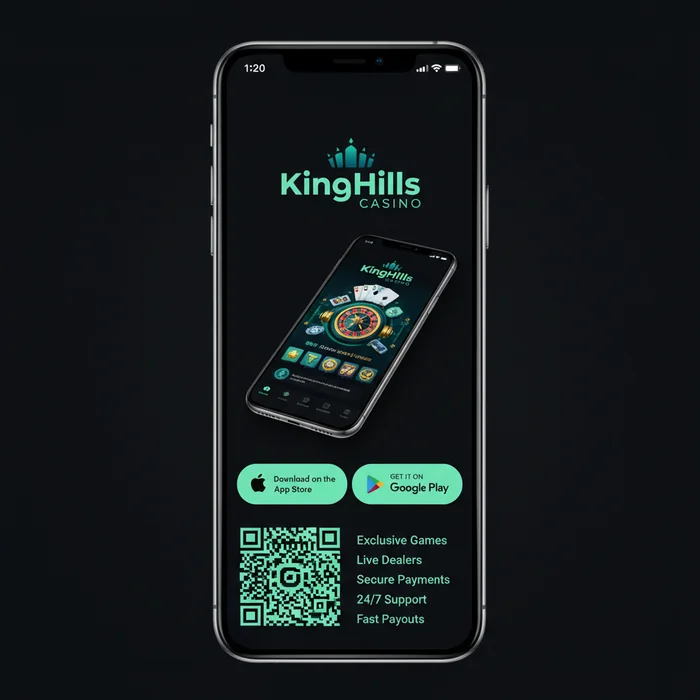
KingHills Casino works on mobile devices via an adapted browser interface for iOS and Android — no native app required.
Beyond simply shrinking the desktop site, we've rethought navigation logic, game loading sequences, and account management so that every tap feels intentional. New players can sign up directly from the app, verify their account, claim their welcome offer, and be inside a slot within minutes. Returning players get one-tap login, instant access to their favourite game categories, and push notifications for promotions they'd otherwise miss. Whether you're on an iPhone 15 or a mid-range Android device, the experience is designed to feel native — not like a website wearing a mobile costume.
Device Compatibility at a Glance
| Platform | Minimum Version | Download | App Size |
|---|---|---|---|
| iOS (iPhone & iPad) | iOS 13.0 or later | Available via App Store | Approx. 85 MB |
| Android | Android 8.0 (Oreo) or later | APK direct download from our app page | Approx. 78 MB |
| Windows (Desktop Client) | Windows 10 or later | Browser-based, no client required | N/A |
| Mobile Browser (No Download) | Any modern browser (Chrome 90+, Safari 14+) | No download required | N/A |
| Tablet (iOS & Android) | Same as respective OS above | Same app — auto-adapts to tablet layout | Approx. 85–90 MB |
iOS Support and Apple Ecosystem
Our iOS build is optimised for the full range of Apple hardware currently in circulation, from older SE models through to the latest Pro Max lineup. The interface scales cleanly across screen sizes without any of the letterboxing or awkward white margins that plague poorly adapted apps. Face ID and Touch ID are both supported for login, meaning you're authenticated and inside your account in under two seconds.
iPad users get a genuinely expanded layout — not simply a stretched phone view. Game grids display more titles per row, the live casino lobby shows multiple table feeds simultaneously, and the account dashboard spreads across the wider canvas in a way that makes managing your balance and transaction history far more comfortable.
Android Reach and APK Installation
Because Google Play's policies around real-money gaming vary by region, we distribute the KingHills Casino Android app as a direct APK from our dedicated app page. Installation takes roughly ninety seconds once you've enabled installs from unknown sources in your device settings — a one-time step we walk you through with an in-page guide. The APK is signed, scanned, and updated in sync with our iOS releases, so Android players are never running an older version of the platform.
We've tested across a broad range of Android hardware, including devices running custom manufacturer skins like Samsung One UI and Xiaomi MIUI. Performance holds up well even on mid-tier chipsets, because we've prioritised efficient rendering over visual excess. If your phone handles streaming video smoothly, it handles our live casino tables without issue.
Performance That Keeps Up With You
Speed, Data, and Battery
Imagine stepping into a session where the game is loaded before you've finished settling into your seat. Our app's initial load time on a standard 4G connection sits comfortably under four seconds for most game categories. Slot titles — which account for the bulk of mobile sessions — are pre-cached after your first visit, so returning to a favourite game feels nearly instant. Live casino streams buffer within two to three seconds on a stable connection, and we use adaptive bitrate technology to maintain picture quality even when your signal dips.
Data consumption is something we take seriously, because not every player is on unlimited mobile data. Standard slot sessions consume modest data per hour, and live dealer streams are configurable — you can drop the stream quality to a lower setting in the app's video preferences without affecting gameplay. Push notifications keep you informed about active promotions and deposit match windows without requiring you to keep the app open in the background.
Battery and Offline Considerations
We've implemented background process limits so the app doesn't quietly drain your battery when minimised. During active play, our rendering engine prioritises frame consistency over peak visual fidelity, which keeps CPU load — and by extension heat and battery draw — lower than many comparable platforms. For commuters and travellers, this matters more than it might seem.
Live casino and real-money slots require an active connection by their nature. However, the app shell, your account dashboard, transaction history, and bonus tracker all load from local cache, meaning you can review your account details even in areas with poor signal.
Mobile App vs Desktop: What Changes, What Doesn't
| Feature | Mobile App | Desktop |
|---|---|---|
| Game Selection | Full library, touch-optimised titles highlighted | Full library, broader visual grid |
| Graphics Quality | Adaptive — scales to device capability | Maximum resolution, no compromise |
| Navigation Speed | Gesture-based, single-thumb friendly | Mouse-driven, multi-panel layouts |
| Push Notifications | Yes — real-time bonus and promotion alerts | Browser notifications only (opt-in) |
| Bonus Access | All bonuses available, mobile-exclusive offers possible | All bonuses available |
| Payment Methods | Full range including Apple Pay and Google Pay | Full range, no mobile wallet shortcuts |
| Live Chat Support | Floating chat widget, always accessible | Sidebar chat, wider input area |
Choosing the Right Platform for Your Session
Here's what happens when you sit down at a desktop for a long live roulette session: the wider screen lets you monitor the bet history panel, the dealer feed, and the chat simultaneously without anything feeling cramped. For extended, high-concentration sessions — particularly at live tables — desktop remains the more comfortable environment simply because of screen real estate.
Mobile, by contrast, wins on immediacy and convenience. Short sessions, quick slot spins between commitments, checking your bonus balance, or making a deposit on the move — these are where the KingHills Casino mobile app genuinely earns its place. The two platforms share the same account, the same wallet, and the same bonus eligibility, so switching between them mid-day is seamless.
How to Get the KingHills Casino App on Your Device
iOS Download
- Open the App Store on your iPhone or iPad and search for KingHills Casino, or follow the direct link from our app page.
- Tap Get and authenticate with Face ID, Touch ID, or your Apple ID password to begin the download.
- Once installed, open the app and either log in to your existing account or tap Join Now to register.
- Enable push notifications when prompted — this ensures you receive time-sensitive bonus alerts directly to your lock screen.
Android Download
- Visit our dedicated app page from your Android browser and tap the Download APK button to save the installation file.
- Go to your device Settings, navigate to Security or Install Unknown Apps, and allow installs from your browser — this is a one-time permission.
- Open the downloaded APK file from your notifications bar or file manager and follow the on-screen installation prompts; the process takes under a minute.
- Launch the KingHills Casino Android app, sign in or create a new account, and grant notification permissions to stay updated on your latest offers.
Inside the KingHills Casino App: Features Built for Mobile Players
Games on Mobile
Our mobile library spans several hundred titles across slots, live dealer tables, table games, and instant-win formats. The app's home screen organises these into clearly labelled categories — New Arrivals, Live Casino, Jackpots, Slots, and Table Games — with a persistent search bar at the top that filters results as you type. Finding a specific title takes seconds rather than the scrolling marathon that poorly structured mobile casinos require.
Touch-optimised titles are flagged within the game grid, and our editorial team curates a Mobile Picks collection that highlights games specifically designed for smaller screens — typically those with simplified control layouts and portrait-mode support. Among the titles our mobile players return to most frequently: Gates of Olympus for its portrait-friendly reel layout, Sweet Bonanza for its grid format that translates naturally to touch, and Crazy Time from the live casino section, which streams beautifully even on mid-range hardware.
Game loading times are deliberately prioritised in our infrastructure. Slots typically render their opening screen within two to three seconds on a 4G connection, and the game itself is interactive within five. Live tables connect to the dealer feed in a comparable window. We cache game assets after your first session, so your regular titles load faster on every subsequent visit.
Mobile Bonuses
Every promotion available on desktop is accessible through the app — there's no separate mobile tier that receives lesser treatment. Your welcome bonus can be claimed, tracked, and wagered entirely from your phone, and the bonus progress bar in your account dashboard updates in real time so you always know exactly where you stand. The KingHills Casino mobile bonus tracker is one of the more transparent implementations we've built — no digging through menus to find your remaining playthrough requirement.
Push notifications play a meaningful role in keeping mobile players connected to time-limited offers. When a reload bonus window opens or a free spin promotion goes live, the app delivers an alert directly to your device. You can manage notification preferences granularly in the app settings — choosing to receive alerts for specific promotion types while muting others.
Periodically, we run offers structured specifically around mobile engagement — these might be tied to playing a set number of rounds through the app or depositing via a mobile wallet method. Watch the promotions hub within the app for these, as they're not always surfaced on the desktop version.
Banking on Mobile
Deposits and withdrawals work identically through the app as they do on desktop, with one meaningful addition: mobile wallet support. iOS users can complete deposits via Apple Pay with a Face ID confirmation, while Android users have access to Google Pay — both methods bypass manual card entry entirely and process in seconds. For players who prefer traditional methods, Visa, Mastercard, and a selection of e-wallets including Skrill and Neteller are all available through the same cashier interface.
The withdrawal process is fully self-contained within the app. You can submit a withdrawal request, upload any required verification documents using your phone's camera, and track the status of your request — all without switching to a desktop. Withdrawal requests are processed through the same pipeline regardless of whether they originate from mobile or desktop, so there's no delay penalty for banking on the go.
Your transaction history, available in the My Account section of the app, displays a full chronological record of deposits, withdrawals, bonus credits, and game wagers. Filters let you narrow by date range or transaction type, which is particularly useful when cross-referencing a bonus requirement against your recent play history.
Start Playing — On Your Terms
We built the KingHills Casino app for players who don't want to compromise just because they're away from a desk. Fast load times, intuitive navigation, full banking capability, and a game library that doesn't shrink when you switch to mobile — these aren't features we added as an afterthought. They're the foundation. Whether you install the app on iOS or Android, or simply open the mobile browser version, you're accessing the same platform, the same account, and the same standards we hold ourselves to across every surface.
New to the platform? Create your KingHills account today — the entire sign-up process takes under three minutes from a mobile device, and your welcome offer is waiting the moment you're in. Already a member? Log in and pick up exactly where you left off. However you choose to play, KingHills Casino is ready when you are.